Roulette is often seen as the ultimate casino classic—a game of spinning wheels, bouncing balls, and suspenseful moments that have captivated gamblers for over two centuries. But beneath its glamorous surface lies a world of mathematical precision, subtle strategy, and psychological intrigue. Whether you’re drawn to the clatter of chips at a real casino or the digital spin of an online wheel, mastering roulette involves more than luck. It’s about understanding the intricacies of the game, recognizing patterns, and making informed decisions. This comprehensive guide explores how to truly master roulette: from grasping its mechanics and variants to leveraging probability, psychology, and advanced strategies.
The Fascinating Origins and Evolution of Roulette
Roulette’s story begins in 18th-century France, combining elements from several older games and the philosophy of probability. The word “roulette” means “little wheel” in French. The single-zero version, known as European roulette, was first introduced in Paris casinos in 1842 by François and Louis Blanc. Meanwhile, American casinos adopted a double-zero variant, giving birth to the two main forms of the game.
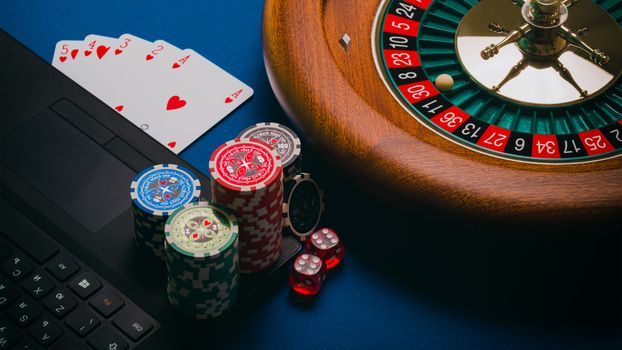
Today, roulette dominates both traditional and online casinos worldwide. According to the UK Gambling Commission, roulette accounted for 15% of all casino table game revenue in 2022. The game’s allure lies in its apparent simplicity: players bet on numbers, colors, or groups, then watch as the ball determines their fate. Yet, the wheel’s design and the odds it offers are meticulously crafted to balance excitement and house advantage.
.png)
Decoding Roulette Variants: European, American, and French Wheels
Understanding the differences between roulette variants is key to mastering the game. The wheel’s layout and the house edge change from version to version, significantly affecting your odds. Here’s a comparative overview:
| Roulette Variant | Number of Pockets | House Edge | Special Rules |
|---|---|---|---|
| European Roulette | 37 (0–36) | 2.70% | Single zero; standard payouts |
| American Roulette | 38 (0, 00, 1–36) | 5.26% | Double zero increases house edge |
| French Roulette | 37 (0–36) | 1.35% (on even-money bets) | La Partage/En Prison rules reduce loss on zero |
The crucial takeaway: always favor European or French roulette when possible. The single zero and special rules like “La Partage” (half your even-money bet is returned if the ball lands on zero) dramatically improve your long-term odds compared to American roulette’s double zero.
The Mathematical Heart of Roulette: Odds, Probabilities, and Payouts
Roulette may look random, but every spin is governed by strict mathematics. Knowing the true odds and payouts can help you make smarter decisions and manage your bankroll efficiently.
For example, in European roulette, betting on a single number (called a “straight up” bet) pays 35:1, but the true odds are 1 in 37 (2.7%). This means over the long run, the house is always slightly ahead. Even-money bets (red/black, odd/even, high/low) have a nearly 50% chance, but the presence of zero means you’ll lose slightly more than you win.
Probability breakdown:
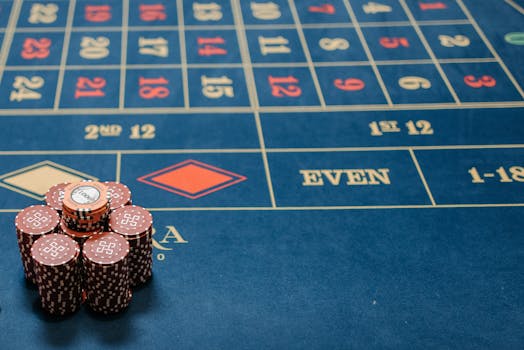
- Straight up (single number): 2.7% chance (1/37) - Split (two numbers): 5.4% chance (2/37) - Street (three numbers): 8.1% chance (3/37) - Corner (four numbers): 10.8% chance (4/37) - Six line (six numbers): 16.2% chance (6/37) - Even-money bets (red/black, etc.): 48.6% chance (18/37)In American roulette, the odds worsen due to the additional 00 pocket. For instance, straight-up bets have only a 2.63% chance (1/38), and even-money bets drop to 47.4%.
Roulette’s house edge comes from the difference between the payout and the actual probability. Over thousands of spins, the casino’s mathematical advantage will always assert itself. Recognizing this is essential for any player hoping to master the game.
Beyond Luck: Psychological Factors and Player Behavior in Roulette
While math governs the game, human psychology often dictates how players behave at the table. One of the most common phenomena is the “gambler’s fallacy”—the belief that past results influence the future. For example, if black has come up five times in a row, many players believe red is “due,” even though the odds remain the same each spin.
Casinos are designed to heighten excitement and keep players engaged. The spinning wheel, the anticipation as the ball bounces, and the communal atmosphere all encourage risk-taking. In fact, research published by the University of British Columbia found that the suspense and near-misses in games like roulette trigger dopamine releases in the brain similar to those experienced by people using addictive substances.
Understanding these psychological traps is as important as knowing the odds. The best roulette players stay emotionally detached, treating each spin as an independent event, and never chasing losses due to superstition or emotion.
Advanced Strategies: Myths, Realities, and Effective Approaches
Many roulette systems promise to “beat the wheel”—from the famous Martingale (doubling your bet after each loss) to the Fibonacci, Labouchère, and D’Alembert strategies. While these systems can provide short-term excitement and occasional wins, none can overcome the house edge in the long run. Here’s why:
- The Martingale system, for example, assumes you’ll eventually win and recover your losses. However, table limits and bankroll constraints mean a long losing streak can wipe you out before you recover. - The Fibonacci and Labouchère systems, which use mathematical progressions, suffer from similar limitations—the house edge remains unchanged.However, some advanced approaches can improve your experience:
1. $1: In rare cases, physical wheels in older or poorly maintained casinos can develop biases (favoring certain numbers). In the 1990s, gambler Gonzalo García-Pelayo reportedly won over $1.5 million after analyzing wheel imperfections. While modern casinos closely monitor wheels for fairness, this technique is a reminder that roulette isn’t always perfectly random in the real world. 2. $1: Choosing outside bets (red/black, odd/even, high/low) offers lower volatility, while inside bets (single numbers, splits) have higher volatility and risk. Adjust your strategy to your risk tolerance and session goals. 3. $1: Set clear limits for losses and wins before playing. According to a 2023 study by the American Gaming Association, disciplined bankroll management increases the average player’s longevity by 35%.Ultimately, the best way to “master” roulette is to combine mathematical knowledge with psychological awareness and disciplined play—not relying on miracle betting systems.
Modern Roulette: Online Innovations and Live Dealer Experiences
Roulette has transformed in the digital age. Online casinos offer dozens of variants, including lightning-fast auto-roulette, immersive live dealer games, and innovative formats with extra multipliers. In 2023, the global online roulette market was valued at over $2.1 billion, with live dealer roulette accounting for 32% of all online table game play.
Key online features include:
- $1: Streamed in real time, these games replicate the social atmosphere of a brick-and-mortar casino. - $1: Many online platforms provide statistics and bet histories, helping players analyze their sessions. - $1: Some games add random multipliers to straight-up bets, creating jackpot-like opportunities.However, the fundamentals remain unchanged. The random number generators (RNGs) used in digital roulette are rigorously tested for fairness. In live games, cameras and sensors ensure transparency. The odds and house edge are still dictated by the wheel layout, whether physical or virtual.
Essential Mindset: Responsible Play and Sustainable Enjoyment
Roulette’s enduring appeal lies in the blend of luck, strategy, and spectacle. But true mastery means knowing your limits. Gambling should always be seen as entertainment, not a reliable path to riches. According to the National Council on Problem Gambling, around 2 million Americans struggle with gambling addiction, while another 4-6 million are considered “problem gamblers.”
To play responsibly:
- Set session time and money limits before you start. - Take regular breaks to maintain perspective. - Avoid chasing losses or playing under the influence. - Use casino tools like deposit limits and self-exclusion where available.Mastering roulette is ultimately about maximizing enjoyment while minimizing risk. Embrace the excitement, savor the suspense, but always keep the odds in mind.
Unlocking the Secrets of Roulette: Final Thoughts
Roulette is more than a game of chance—it’s a fascinating blend of history, mathematics, psychology, and modern technology. Mastery is not about guaranteeing a win on every spin, but about making informed choices, understanding the intricacies, and enjoying the unique experience this classic game provides. By choosing the right wheel, understanding the odds, managing your bets, and playing responsibly, you’ll unlock new depths of fun and perhaps even enjoy more frequent wins. Remember: in the world of roulette, knowledge is as powerful as luck.