Roulette is one of the most iconic and captivating games in any casino, whether brick-and-mortar or online. The rapid spin of the wheel, the mesmerizing click of the ball, and the anticipation as it settles into a pocket have thrilled players for centuries. Yet, beneath its apparent simplicity lies a game rich in history, mathematical intricacies, and elegant probability. If you want to master roulette, you need more than just luck—you need a deep understanding of the game's mechanics, probabilities, and subtle strategies. In this article, we explore the fascinating world of roulette, equipping you with the knowledge to play with confidence and skill.
The Origins and Evolution of Roulette
To master any game, understanding its history provides valuable context. Roulette, meaning “little wheel” in French, dates back to 18th-century France. The modern game was a blend of earlier gambling games and the mathematical musings of Blaise Pascal, who attempted to create a perpetual motion machine—which inadvertently led to the prototype of the roulette wheel.
By the late 1790s, roulette had become a staple of Parisian gambling houses. In the 19th century, French brothers François and Louis Blanc introduced the single-zero wheel in Monte Carlo, giving rise to the “European” version. By comparison, the “American” version, popularized in the United States, introduced a double-zero (00) slot, increasing the house edge.
.png)
Roulette’s appeal endures thanks to its elegant simplicity, yet it is a game that rewards those who delve into its details. Today, the global gambling industry generates over $400 billion per year, with roulette contributing a significant share both online and offline.
The Anatomy of the Roulette Wheel and Table
A key aspect of mastering roulette is understanding the physical and mathematical layout of the game. There are two main types of roulette wheels:
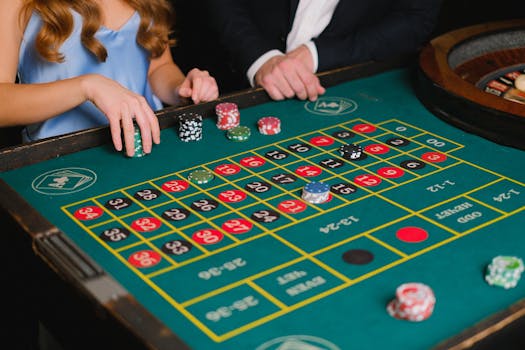
- European roulette: 37 pockets (numbers 1-36 and a single 0) - American roulette: 38 pockets (numbers 1-36, a single 0, and a double 00)Each pocket is colored alternately red and black, except for the green zero (and double zero in American). The numbers are arranged non-sequentially to balance the distribution of even/odd and high/low values.
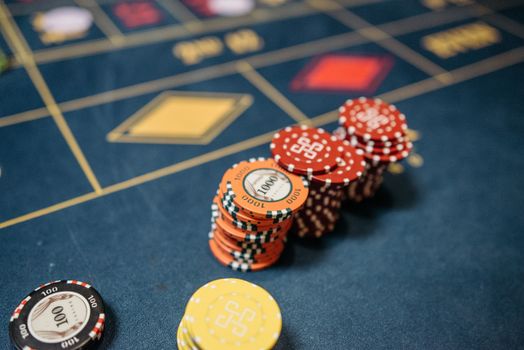
The table features a layout where players place bets on single numbers, groups of numbers, colors, or characteristics (odd/even, high/low).
Here’s a comparative overview of the two main roulette types:
| Feature | European Roulette | American Roulette |
|---|---|---|
| Number of pockets | 37 (1-36 + 0) | 38 (1-36 + 0 + 00) |
| House edge | 2.70% | 5.26% |
| Popular regions | Europe, Asia | USA, Caribbean |
| Odds of single number win | 1 in 37 (2.70%) | 1 in 38 (2.63%) |
Knowing these differences helps players make informed choices, as the extra double zero in American roulette nearly doubles the casino’s edge.
The Mathematics of Roulette: Odds, Probabilities, and Payouts
Roulette is a game of probability, and every bet you place comes with a precise mathematical expectation. Understanding the odds is crucial for both strategy and bankroll management.
Let’s break down some of the key bets:
- Straight-up (single number): Pays 35:1. Probability in European roulette is 1/37 (2.70%), and in American roulette, 1/38 (2.63%). - Red/Black or Odd/Even: Pays 1:1. Probability in European roulette is 18/37 (~48.65%), slightly less than 50% due to the zero pocket. - Dozens/Columns: Pays 2:1. Probability is 12/37 (~32.43%) in European roulette.The house edge is derived from the payout ratios being slightly less than the true odds. For example, if a fair game with 37 numbers paid 36:1 for a straight-up bet (instead of 35:1), there would be no house edge.
A few key numbers: - In European roulette, the expected loss per $100 bet is $2.70. - In American roulette, that loss jumps to $5.26 per $100 bet.Understanding these numbers helps players manage expectations and make smarter bets.
Advanced Betting Systems and Their Realities
Many players attempt to “beat” roulette using betting systems—structured ways to vary bet sizes and selection. Some of the most famous include the Martingale, Fibonacci, and Labouchere systems. Here’s how they work and their real-world limitations:
- The Martingale: Double your bet after a loss to recover all previous losses plus a profit equal to your original bet. This sounds appealing but quickly runs into table limits and bankroll constraints. For example, after just 7 consecutive losses, a $10 starting bet balloons to $1,280. - The Fibonacci: Increase bets following the Fibonacci sequence (1, 1, 2, 3, 5, 8, …) after losses. This can slow losses but does not eliminate the house edge. - The Labouchere: Players decide a target profit, write a sequence of numbers, and bet the sum of the first and last. After a win, cross off the numbers; after a loss, add the bet to the sequence.All systems are ultimately subject to the same mathematical reality: the house edge is built into the game. No betting system can change the underlying probabilities or guarantee long-term profit. According to a study by the University of Nevada, even using advanced betting systems, players’ outcomes over thousands of spins closely match the theoretical house edge.
Psychology and Discipline: The Hidden Skills of Roulette Masters
While luck and mathematics dominate the mechanics of roulette, psychological discipline separates casual players from true masters. Here’s how:
- Bankroll Management: Set aside a fixed amount you are willing to lose. Experts recommend never betting more than 5% of your bankroll on a single spin. For example, with $500, keep bets at $25 or less. - Emotional Control: Chasing losses leads to reckless bets. Mastery means sticking to your plan, regardless of streaks. - Recognizing Patterns vs. Randomness: The human brain seeks patterns, but each roulette spin is independent. Avoid the gambler’s fallacy—the belief that past results affect future outcomes. - Knowing When to Walk Away: Set win and loss limits before you play. For example, decide to leave if you double your money or lose half of your bankroll.In 2017, a survey by the UK Gambling Commission found that players who set strict limits were 63% more likely to report positive gambling experiences than those who did not.
Technological Advances: How Modern Roulette Keeps the Game Fair
With the rise of online casinos, roulette has entered the digital age. Modern technology ensures fairness and transparency in both physical and virtual games.
- Random Number Generators (RNG): In online roulette, outcomes are determined by sophisticated RNG algorithms, simulating the physical randomness of a spinning wheel. - Live Dealer Roulette: Many online casinos now offer live-streamed roulette, combining the convenience of online play with the authenticity of a real wheel and croupier. - Regulatory Oversight: Leading jurisdictions, including the UK, Malta, and New Jersey, require rigorous testing of roulette wheels and RNG software to ensure fairness. For example, the UK Gambling Commission conducts regular audits and requires a theoretical return-to-player (RTP) percentage disclosure for all games.These advances have expanded access to roulette globally, with an estimated 5 million people playing online roulette each month as of 2022.
Conclusion: The Art and Science of Mastering Roulette
Roulette is more than just a game of chance—it’s a blend of mathematics, psychology, and tradition. While the house always has an edge, players who understand the game’s intricacies can maximize enjoyment and minimize losses. Mastery comes from respecting the probabilities, making informed bets, and exercising discipline. Whether at a glamorous Monte Carlo casino or playing online from home, the thrill of the spinning wheel endures. With knowledge, strategy, and a level head, you can elevate your roulette experience and play with true mastery.